Instant Pot Not Sealing

Updated Nov 02, 2026
This post may contain affiliate links. Please see our disclosure policy.

If your Instant Pot isn't sealing or coming to pressure, don't assume something is broken. Most of the time, it's a quick fix.
After years of cooking with the Instant Pot and helping readers learn how to use an Instant Pot and troubleshoot problems, I've narrowed down the most common reasons an Instant Pot won't seal and, more importantly, how to fix them.
5 Things to Check When Your Instant Pot Won't Seal

Before troubleshooting, keep in mind that an Instant Pot can take 5-30 minutes to reach pressure, depending on the recipe. A little steam escaping during preheating is normal. But if the float valve never rises or steam continues escaping, your Instant Pot may not be sealing properly.
Here are the first things to check:
- Steam release valve: Make sure it's set to sealing, not venting.
- Sealing ring: Make sure the silicone ring is clean, properly fitted, and undamaged.
- Float valve: Make sure it can move freely, and that the small silicone cap underneath is in place.
- Liquid: Check that you've added enough thin liquid for your Instant Pot's size.
- Lid and inner pot: Check for food debris, damage, or anything preventing the lid from sealing properly.
Still having trouble? I'll walk you through what each problem looks like, why it happens, and how to fix it safely.
1. Check the Steam Release Valve
One of the most common reasons an Instant Pot won't seal is that the steam release valve is set to venting instead of sealing. When this happens, steam escapes instead of building pressure inside the pot.
And trust me, this is a mistake I've made more times than I'd like to admit!
How to fix it:
- Check the valve position. On models with a manual steam release valve, make sure it's set to sealing. Some newer models seal automatically when you close the lid.
- If steam has been escaping for several minutes, cancel the cooking cycle. Once the pot has fully depressurized, check that there is still enough liquid before restarting the recipe.
- If the valve is already set to sealing but steam keeps escaping, check for food debris or damage, following your model's instructions for cleaning the valve.

2. Check the Sealing Ring
The silicone sealing ring inside your Instant Pot lid creates the airtight seal needed for pressure cooking. If it's loose, improperly fitted, or damaged, steam can escape and prevent the Instant Pot from coming to pressure.
How to fix it:
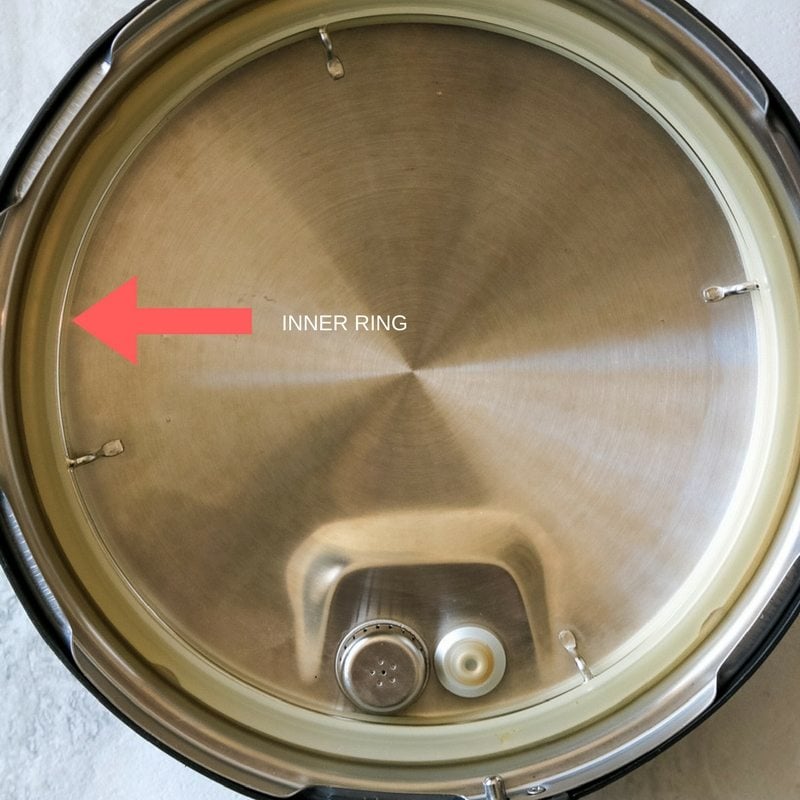
- Check the placement. Make sure the sealing ring is fitted securely around the metal rack inside the lid. It should sit evenly, with no sections hanging loose.
- Clean the ring. Remove it and wash it with warm, soapy water. Check for food debris along the ring and the metal rack before putting it back in place.
- Look for damage. If the ring is cracked, stretched out, or no longer fits snugly, it's time to replace it.
Cooking back-to-back recipes? The sealing ring can expand when it's hot, especially after you've just finished pressure cooking. If you're having trouble getting the Instant Pot to seal for a second recipe, allow the ring to cool completely and check that it still fits snugly. If it's stretched out or damaged, replace it.
Note from Kristen
If you regularly use your Instant Pot, I recommend keeping an extra sealing ring on hand. They wear out over time, and having a replacement is much easier than discovering yours needs replacing when trying to cook dinner. I also I keep a separate one for sweet recipes like Instant Pot yogurt so it doesn't pick up savory smells.
3. Check the Float Valve
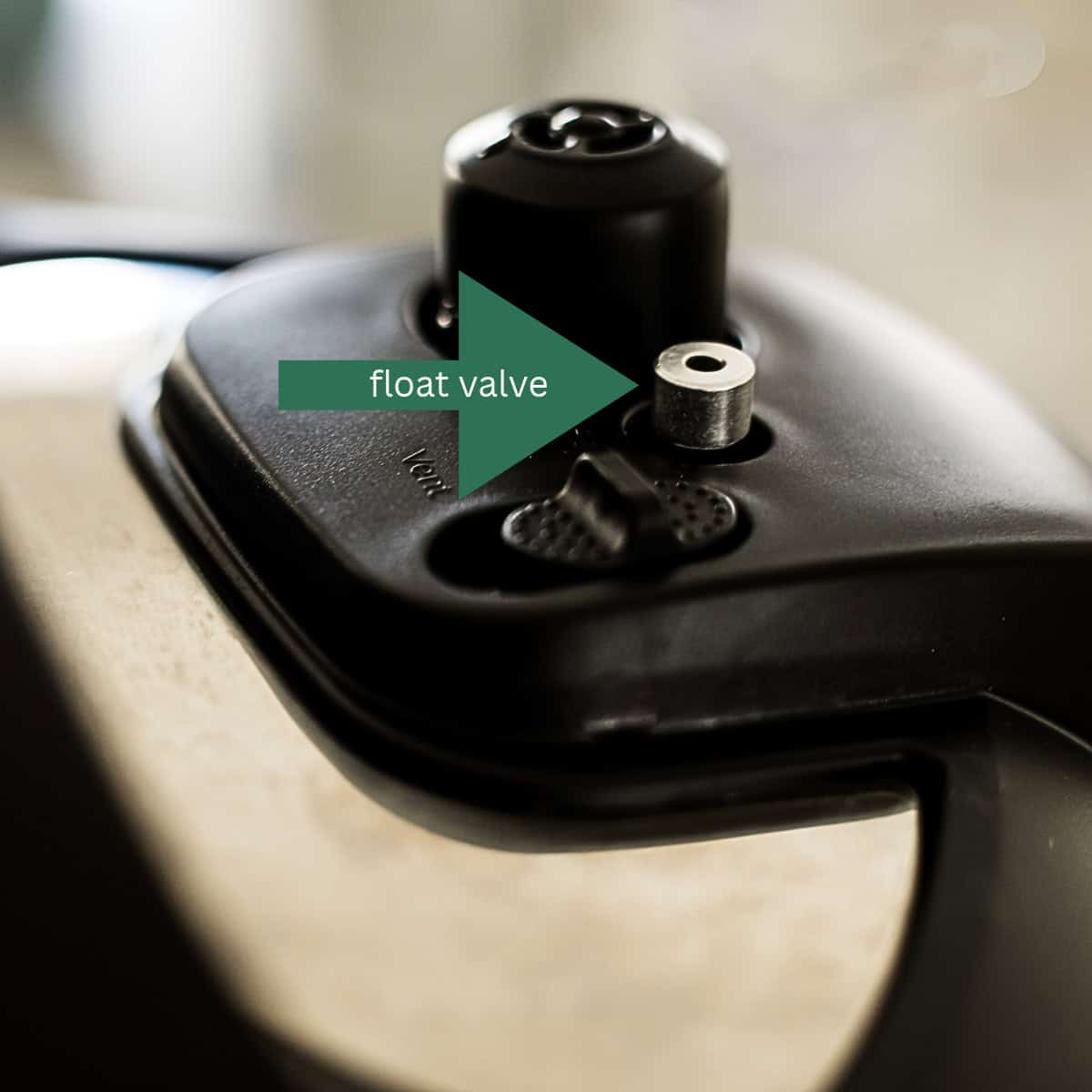
The float valve is the small metal pin on your Instant Pot lid that rises when pressure builds inside the pot. If it's stuck, dirty, or missing the silicone cap underneath, your Instant Pot may not seal properly.
How to fix it:
- Check for food debris. Once the Instant Pot has completely depressurized and cooled, check the float valve for dried food or residue that could prevent it from moving freely.
- Clean the float valve. Follow your model's instructions for removing and cleaning the float valve and surrounding area. Make sure it moves freely when reassembled.
- Check the silicone cap. Look underneath the lid to make sure the small silicone cap is securely attached to the float valve. If it's missing or damaged, you'll need a replacement.
Keep in mind: The float valve won't rise immediately when you start pressure cooking. It only rises once enough pressure has built up inside the pot.
4. Check That You Have Enough Liquid
Your Instant Pot needs liquid to create the steam that builds pressure. If there isn't enough liquid, the Instant Pot may struggle to come to pressure or display a burn warning.
How to fix it:
- Check the liquid amount. My general guideline is ½ cup of thin liquid for a 3-quart, 1 cup for a 6-quart, and 1½ cups for an 8-quart. I've tested this in many models over the years, but always check your manual and follow your recipe's liquid amount.
- Use thin liquid. Water, broth, and other thin liquids produce steam more readily than thick sauces. Tomato sauce, cream-based sauces, and other thick ingredients can scorch on the bottom of the pot before enough pressure builds.
- Check for evaporation. If steam has been escaping for an extended period, you may have lost too much liquid. Cancel cooking, allow the Instant Pot to fully depressurize, and check the liquid level before restarting.
5. Check the Lid and Inner Pot
If your Instant Pot still won't seal, check the lid and inner pot. Food debris, improper positioning, or damage can prevent the pot from sealing properly.
How to fix it:
- Check the rim. Make sure the inner pot rim is clean and free of food debris that could interfere with the seal.
- Check the lid placement. Make sure the inner pot sits properly inside the cooker, and the lid is fully closed and locked into place.
- Inspect for damage. Look for dents, warping, or damage to the inner pot or lid that could prevent a proper seal. If you notice damage, stop using the Instant Pot until the affected part has been replaced or evaluated by the manufacturer.
What If Your Instant Pot Still Won't Seal?
If you've checked the steam release valve, sealing ring, float valve, liquid level, and lid, but your Instant Pot still won't seal, you may want to contact Instant Pot customer support for help.
And remember, never force the lid open or attempt to repair a pressurized Instant Pot.
What If Your Instant Pot Says Burn?
If your Instant Pot displays a Burn or Food Burn warning, it means the bottom of the inner pot is getting too hot. This typically happens when food sticks to the bottom, there isn't enough thin liquid, or a thick sauce scorches before pressure builds.
How to fix it:
- Cancel cooking. Allow the Instant Pot to fully depressurize before opening the lid.
- Check the bottom of the pot. If food is stuck, transfer the contents to another dish, clean the inner pot, then restart.
- Add liquid if needed. Make sure your recipe has enough thin liquid to build pressure.
- Layer ingredients properly. Unless your recipe says otherwise, add thick sauces and tomato-based products last and don't stir them in, as I do in my Instant Pot Spaghetti recipe.
My tip: If you use the sauté function before pressure cooking, always deglaze the pot with a bit of broth or water, scraping up any browned bits. Those flavorful bits are great for your recipe, but leaving them stuck to the bottom can trigger a burn warning.

Final Tip: Get to Know Your Instant Pot
After years of cooking with several different Instant Pot models, I've learned that some are simply more temperamental than others. In my experience, the 8-quart Duo and Instant Pot Rio have been a little fussier when it comes to burn notices.
My advice? Pay attention to how your particular model behaves. A quick water test is an easy way to see how long yours takes to come to pressure and what normal steam looks like. Once you get familiar with how long it typically takes to come to pressure and what normal steam release looks like, it's much easier to recognize when something isn't right.


Hi!! I'm new to having am instant pot. I watched your video and it was so helpful. Thank you!!
My question is the venting/sealing knob on my instant pot seems very loose. When I turn it to sealing it doesn't seem like it is in the position and is too loose? Is the knob suppose to feel like that or is it suppose to be tight in position? I tried cooking eggs, the pot came on I selected eggs and after 10 sec it beeped but no time displayed on the pot and it never beeped when it was done which makes me think that it was not working. I have the Lux 8 quart instant pot. Any help is appreciated. Thank you!
Hi Mary! The vent knob does not really lock into position, so it can be easy to knock out of place. A few times I will hear steam coming out of knob for too long and realize I knocked the knob accidentally. When this happens, I have to open pressure cooker and add more liquid and start again. Have you tried the water test yet? It sounds silly, but it does help you get familiar with the instant pot. Here are my instructions: https://amindfullmom.com/instant-pot-water-test/ And here are my instructions for Instant Pot Eggs: https://amindfullmom.com/instant-pot-hard-boiled-eggs/ If those don't work, let me know, but it may be time to call Instant Pot.
I’m trying to cook and for some reason my instant pot is not pressuring. I’m so frustrated help
Hi Alaka, I understand you are completely frustrated. I would love to help you,but will need a bit more detail.
-Do you have a full 8 ounces liquid in your pressure cooker?
-Is your sealing ring completely sealed on your lid?
-Is your vent knob pointed fully to the sealed position?
There could be other things happening but those are the most common issues. If you could let me know what you were cooking and what settings you had your instant pot on, I can better help you 🙂
Nice post! Our new Viva IP from Sam's club is not getting a countdown most of the time. The seal appears intact, the red pressure valve comes up and we can see steam coming out of the pressure knob in the sealing position However we have noticed the knob doesn't seem to lock in place and can turn clockwise without securely locking like my friends IP model. Not sure if I have a defective unit. Any ideas?
Hi Frank!
It sounds like a defective model if the knob won't stay into place. That is EXTREMELY frustrating. I would contact Sams. They have amazing customer service and should replace or refund (or direct you to a fix) You should never see steam coming out of your vent knob once pressure has been reached. Best of luck!!
Thank you! Took me a while to realize why my squash didn’t cook! Beyond a newby here. All fixed and super excited.
YAY!! So glad all is fixed and working well.
I cooked hard boiled eggs as I usually do using the 5/5/5 method. Eggs were part runny inside. Is this lack of pressure??? Thank you.
Hi Debbi! I am sorry you had issues with your eggs this past time. It may have been your vent knob was left open or your IP was on low pressure instead of high pressure. It could also have been that your eggs had extra large yolks--which occasionally happen with eggs. Next time, check pressure and vent knob, but I would still use 5/5/, especially since it has worked for you in past.
I was attempting to cook a turkey breast for dinner. Time was slipping away. No pressure, read your site, realizing I’d not added liquid. Problem solved. Thanks for saving supper.
YAY!!! I am so grateful I was able to help you. That makes my day, as much as it saved your dinner 😉
Thank you for your video! I tried each of the fixes you showed and one of them worked! I had already bought a replacement InstantPot so I will send my newly fixed original off to college with my daughter! Thanks again!
Oh YAY!!! You and your daughter must be SO happy!