Instant Pot Not Sealing

Updated Nov 02, 2026
This post may contain affiliate links. Please see our disclosure policy.

If your Instant Pot isn't sealing or coming to pressure, don't assume something is broken. Most of the time, it's a quick fix.
After years of cooking with the Instant Pot and helping readers learn how to use an Instant Pot and troubleshoot problems, I've narrowed down the most common reasons an Instant Pot won't seal and, more importantly, how to fix them.
5 Things to Check When Your Instant Pot Won't Seal

Before troubleshooting, keep in mind that an Instant Pot can take 5-30 minutes to reach pressure, depending on the recipe. A little steam escaping during preheating is normal. But if the float valve never rises or steam continues escaping, your Instant Pot may not be sealing properly.
Here are the first things to check:
- Steam release valve: Make sure it's set to sealing, not venting.
- Sealing ring: Make sure the silicone ring is clean, properly fitted, and undamaged.
- Float valve: Make sure it can move freely, and that the small silicone cap underneath is in place.
- Liquid: Check that you've added enough thin liquid for your Instant Pot's size.
- Lid and inner pot: Check for food debris, damage, or anything preventing the lid from sealing properly.
Still having trouble? I'll walk you through what each problem looks like, why it happens, and how to fix it safely.
1. Check the Steam Release Valve
One of the most common reasons an Instant Pot won't seal is that the steam release valve is set to venting instead of sealing. When this happens, steam escapes instead of building pressure inside the pot.
And trust me, this is a mistake I've made more times than I'd like to admit!
How to fix it:
- Check the valve position. On models with a manual steam release valve, make sure it's set to sealing. Some newer models seal automatically when you close the lid.
- If steam has been escaping for several minutes, cancel the cooking cycle. Once the pot has fully depressurized, check that there is still enough liquid before restarting the recipe.
- If the valve is already set to sealing but steam keeps escaping, check for food debris or damage, following your model's instructions for cleaning the valve.

2. Check the Sealing Ring
The silicone sealing ring inside your Instant Pot lid creates the airtight seal needed for pressure cooking. If it's loose, improperly fitted, or damaged, steam can escape and prevent the Instant Pot from coming to pressure.
How to fix it:
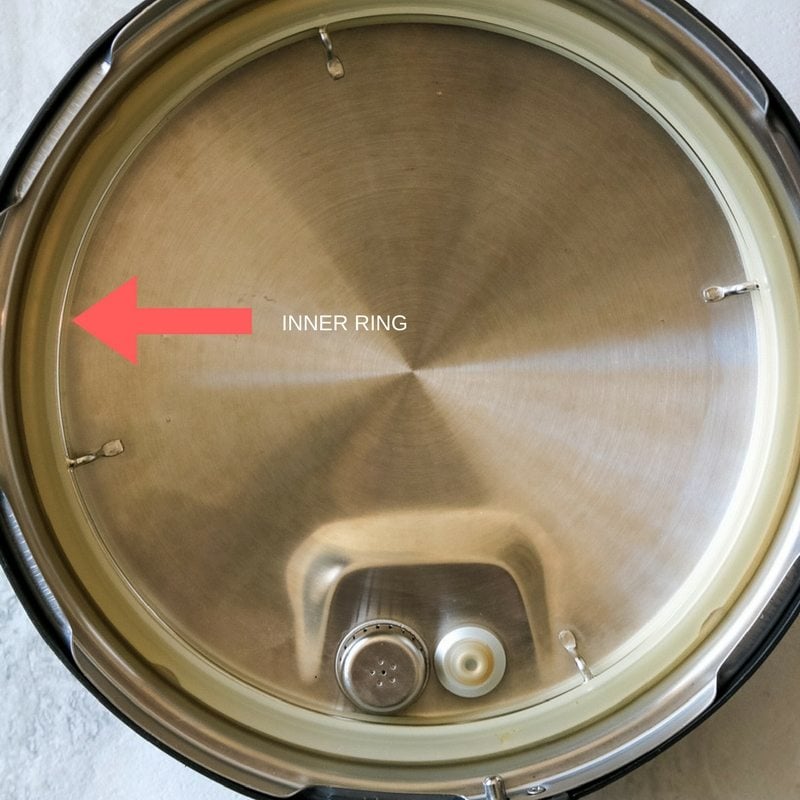
- Check the placement. Make sure the sealing ring is fitted securely around the metal rack inside the lid. It should sit evenly, with no sections hanging loose.
- Clean the ring. Remove it and wash it with warm, soapy water. Check for food debris along the ring and the metal rack before putting it back in place.
- Look for damage. If the ring is cracked, stretched out, or no longer fits snugly, it's time to replace it.
Cooking back-to-back recipes? The sealing ring can expand when it's hot, especially after you've just finished pressure cooking. If you're having trouble getting the Instant Pot to seal for a second recipe, allow the ring to cool completely and check that it still fits snugly. If it's stretched out or damaged, replace it.
Note from Kristen
If you regularly use your Instant Pot, I recommend keeping an extra sealing ring on hand. They wear out over time, and having a replacement is much easier than discovering yours needs replacing when trying to cook dinner. I also I keep a separate one for sweet recipes like Instant Pot yogurt so it doesn't pick up savory smells.
3. Check the Float Valve
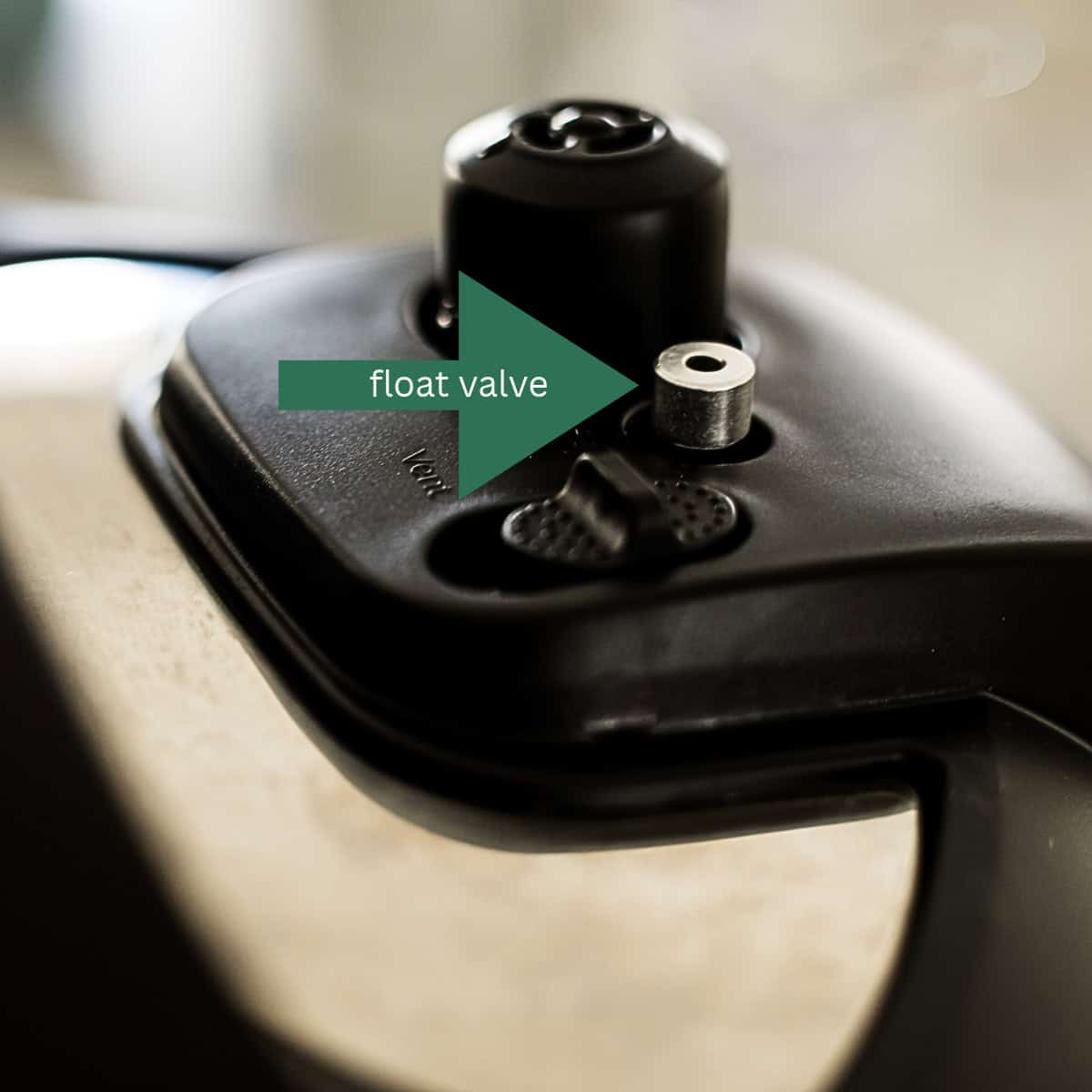
The float valve is the small metal pin on your Instant Pot lid that rises when pressure builds inside the pot. If it's stuck, dirty, or missing the silicone cap underneath, your Instant Pot may not seal properly.
How to fix it:
- Check for food debris. Once the Instant Pot has completely depressurized and cooled, check the float valve for dried food or residue that could prevent it from moving freely.
- Clean the float valve. Follow your model's instructions for removing and cleaning the float valve and surrounding area. Make sure it moves freely when reassembled.
- Check the silicone cap. Look underneath the lid to make sure the small silicone cap is securely attached to the float valve. If it's missing or damaged, you'll need a replacement.
Keep in mind: The float valve won't rise immediately when you start pressure cooking. It only rises once enough pressure has built up inside the pot.
4. Check That You Have Enough Liquid
Your Instant Pot needs liquid to create the steam that builds pressure. If there isn't enough liquid, the Instant Pot may struggle to come to pressure or display a burn warning.
How to fix it:
- Check the liquid amount. My general guideline is ½ cup of thin liquid for a 3-quart, 1 cup for a 6-quart, and 1½ cups for an 8-quart. I've tested this in many models over the years, but always check your manual and follow your recipe's liquid amount.
- Use thin liquid. Water, broth, and other thin liquids produce steam more readily than thick sauces. Tomato sauce, cream-based sauces, and other thick ingredients can scorch on the bottom of the pot before enough pressure builds.
- Check for evaporation. If steam has been escaping for an extended period, you may have lost too much liquid. Cancel cooking, allow the Instant Pot to fully depressurize, and check the liquid level before restarting.
5. Check the Lid and Inner Pot
If your Instant Pot still won't seal, check the lid and inner pot. Food debris, improper positioning, or damage can prevent the pot from sealing properly.
How to fix it:
- Check the rim. Make sure the inner pot rim is clean and free of food debris that could interfere with the seal.
- Check the lid placement. Make sure the inner pot sits properly inside the cooker, and the lid is fully closed and locked into place.
- Inspect for damage. Look for dents, warping, or damage to the inner pot or lid that could prevent a proper seal. If you notice damage, stop using the Instant Pot until the affected part has been replaced or evaluated by the manufacturer.
What If Your Instant Pot Still Won't Seal?
If you've checked the steam release valve, sealing ring, float valve, liquid level, and lid, but your Instant Pot still won't seal, you may want to contact Instant Pot customer support for help.
And remember, never force the lid open or attempt to repair a pressurized Instant Pot.
What If Your Instant Pot Says Burn?
If your Instant Pot displays a Burn or Food Burn warning, it means the bottom of the inner pot is getting too hot. This typically happens when food sticks to the bottom, there isn't enough thin liquid, or a thick sauce scorches before pressure builds.
How to fix it:
- Cancel cooking. Allow the Instant Pot to fully depressurize before opening the lid.
- Check the bottom of the pot. If food is stuck, transfer the contents to another dish, clean the inner pot, then restart.
- Add liquid if needed. Make sure your recipe has enough thin liquid to build pressure.
- Layer ingredients properly. Unless your recipe says otherwise, add thick sauces and tomato-based products last and don't stir them in, as I do in my Instant Pot Spaghetti recipe.
My tip: If you use the sauté function before pressure cooking, always deglaze the pot with a bit of broth or water, scraping up any browned bits. Those flavorful bits are great for your recipe, but leaving them stuck to the bottom can trigger a burn warning.

Final Tip: Get to Know Your Instant Pot
After years of cooking with several different Instant Pot models, I've learned that some are simply more temperamental than others. In my experience, the 8-quart Duo and Instant Pot Rio have been a little fussier when it comes to burn notices.
My advice? Pay attention to how your particular model behaves. A quick water test is an easy way to see how long yours takes to come to pressure and what normal steam looks like. Once you get familiar with how long it typically takes to come to pressure and what normal steam release looks like, it's much easier to recognize when something isn't right.


I purchased the Cuisinart Pressure cooker from Costco and used it for around a decade. It was fantastic for beans and Artichokes and eggs which I cook often. Slowly the Instant Pot brand took over the market and all the recipes and bloggers were using their product and a few of the acessories like the egg racks did not fit in my Cuisinart so I caved and got an instant pot. The instant Pot is no where near a s fast on high as the Cuisinart was, It does not cook beans in the times claimed and it does not cook Artichokes either. the Cuisinart cooked 4 jumbo Artichokes in 7-8 minutes. the Instant Pot takes half an hour. Black beans are the same. Eggs seem to cook okay, 5 minutes on high, just a tiny bit softer, maybe a good thing. but the Cuisinart did eggs in 3. some lucky person at the Salvation Army got my donated Cuisinart, but I wish I still had it. It was dented, and well loved, I hope they like it.
I am sorry the Instant Pot Model is not living up to the Cuisinart for you! You should find it more accurate for timing for new recipes though!
I need help. I have 3 qt instant pot. saute works but when I tried to pressure cook soup (plenty of liquid) after 23 minutes it still was not up to pressure. No burn notice, no steam! I was able to remove the lid with no "give". Even if the sealing ring was bad you would thing there would be some steam?? i was using frozen vegetables and they were cooked through so there was some heat. usually when i make soup it takes the 3 qt about 15 minutes to come to pressure.
Hi Heidi! It sounds like the frozen veggies, may have added to the time it takes to come to pressure, not that your seel is bad. It may have also been that you overfilled past the 2/3rd line, and that will take a lot longer to come to pressure as well. Since no steam was escaping, I wouldn't think your seal is bad. I would simply try again.
I forgot the ring seal. I set it, I forgot about. Came back later to water on the cabinet & will not power on. New control panel? It wasn’t the board.
???
It sounds like water boiled over and may have shorted something. I really am not sure how to troubleshoot this for you, so sorry!
Kristen, I have the 6 qrt Instant pot, purchased from COSTCO over a year ago. Lately, I went to cook ribs and found the Duo Float Valve missing. I ordered a couple valves through Amazon and found the valve to be too thick to pass through the hole in the lid. I sent them back and am not sure what to do. The 8 qrt Instant Pot shows the red valves thinner than the silver 6 qrt valves. I learned the Instant pot was created and made in China. Do you know of a company here in the U.S.A. in whom I can call to order the correct float valve?
Hi Jerry! These float valves from Amazon are designed for the 6 quart Instant Pot Duo and should work for you. If you don't have the Instant pot duo model, let me know and I can help find the correct ones for you 🙂
I have the instant pot duo nova and my float valve steams much but will not pop up. Do I need to get a new one?
I would first try to take it apart and clean it well and then retry. Sometimes that is all it needs. Good luck! If not, I would call customer service or purchase a new float valve.
My timer will not set past 4 mins.
Hi Sharon. Can I ask what model you have? It may be maxing out at 4 hours, not 4 minutes.
I do alot of boiled eggs in mine. I do them exactly the same every time. Lately one time they come out perfect and the next time they are almost raw.
Hi Valerie! That is frustrating! Are you making them in subsequent batches? If so, be sure to let your instant pot cool fully and use fresh cold water for each new batch. If that is not the issue, be sure you are using high pressure.
Hi,
The pot pressures up, cooks, stays pressurized, but when time to wait 10 mins or so for natural release, it reads "END" and does not start counting up. Still pressurized... but not counting up.... Help!
Hi Lisa! Set to keep low that will allow the timing to count up. If that is not an option, that is just the model you have and it is perfectly fine.
I have a Cooks 6qt. (JC Penneys model) Instant pot. It will come to pressure, then while cooking the icon indicating building pressure will come back on during cook time. I'm bewildered, any ideas ????
Hmm, that is odd. Does it come on briefly and then return to cooking fine? Or does it struggle? It may be a tech glitch that is nothing to worry about. OR it could be that you did not have enough liquid in the pot and it was struggling with a potential burn notice. Be sure you always use a full 1 cup thin liquid 🙂 I hope that helps, I am not familiar with JcPenny's model.