
This post may contain affiliate links. Please see our disclosure policy.

Save money, reduce sodium, and enjoy more flavorful meals using this simple recipe for Homemade Chicken Stock. You won't believe how easy it is to make!
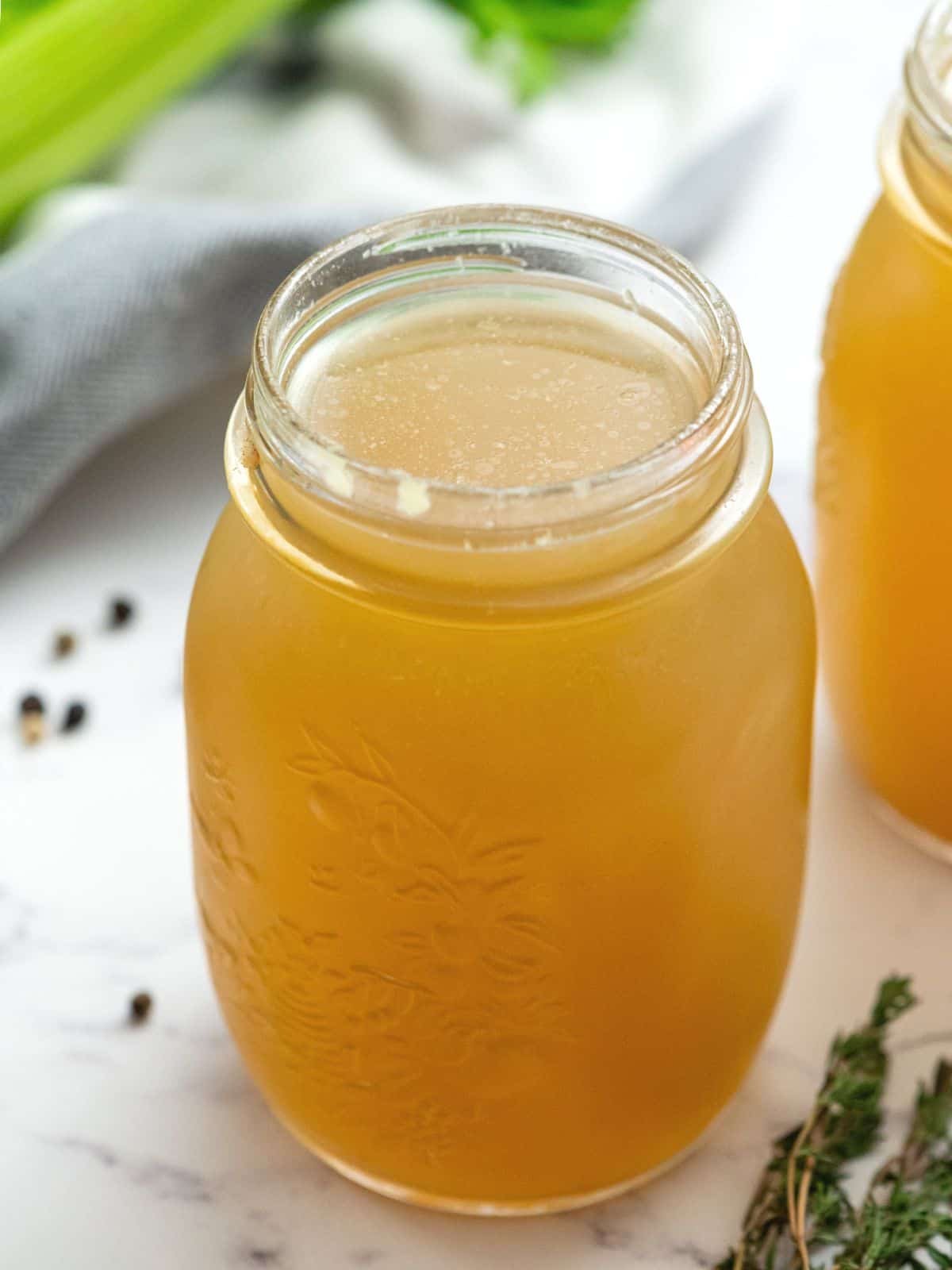
Why Homemade Stock is the Best
- Superior Flavor. This recipe for Chicken Stock will make your recipes taste better, as the rich flavor of homemade stock is superior to anything storebought.
- Quality Control. Homemade chicken stock is made without added food coloring, MSG, yeast extract, and preservatives. You also can control the level of sodium.
- Costs Pennies to Make. As this recipe uses leftover chicken bones and vegetable scraps, you really only need water to make the most incredible-tasting chicken stock. Talk about a money-saver!
- Makes a Ton. This recipe for homemade chicken stock makes quite a bit and freezes beautifully. Make a big batch and then keep it in the freezer to use as desired.
Notes on Ingredients
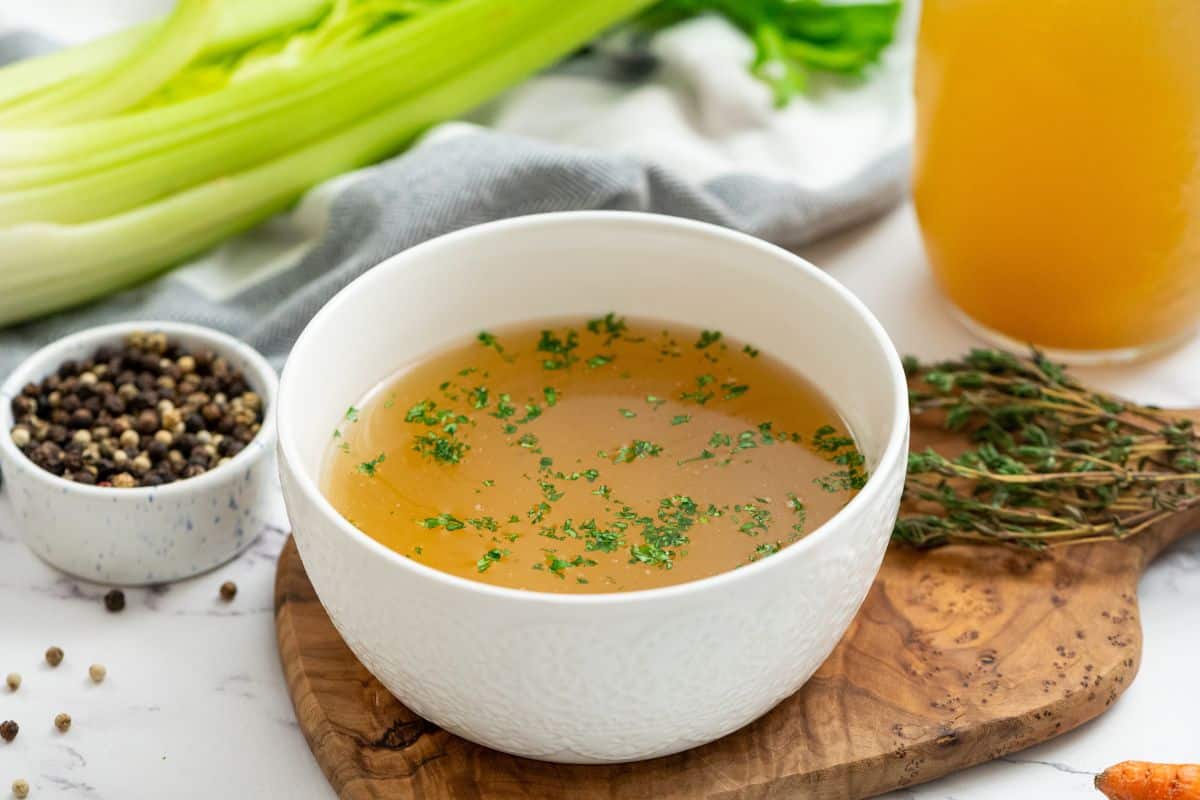
To make chicken stock, the only things you really need are chicken bones, or the carcass of a whole chicken, and water. However, to amp up the flavor, I recommend adding herbs, vegetables, and salt.
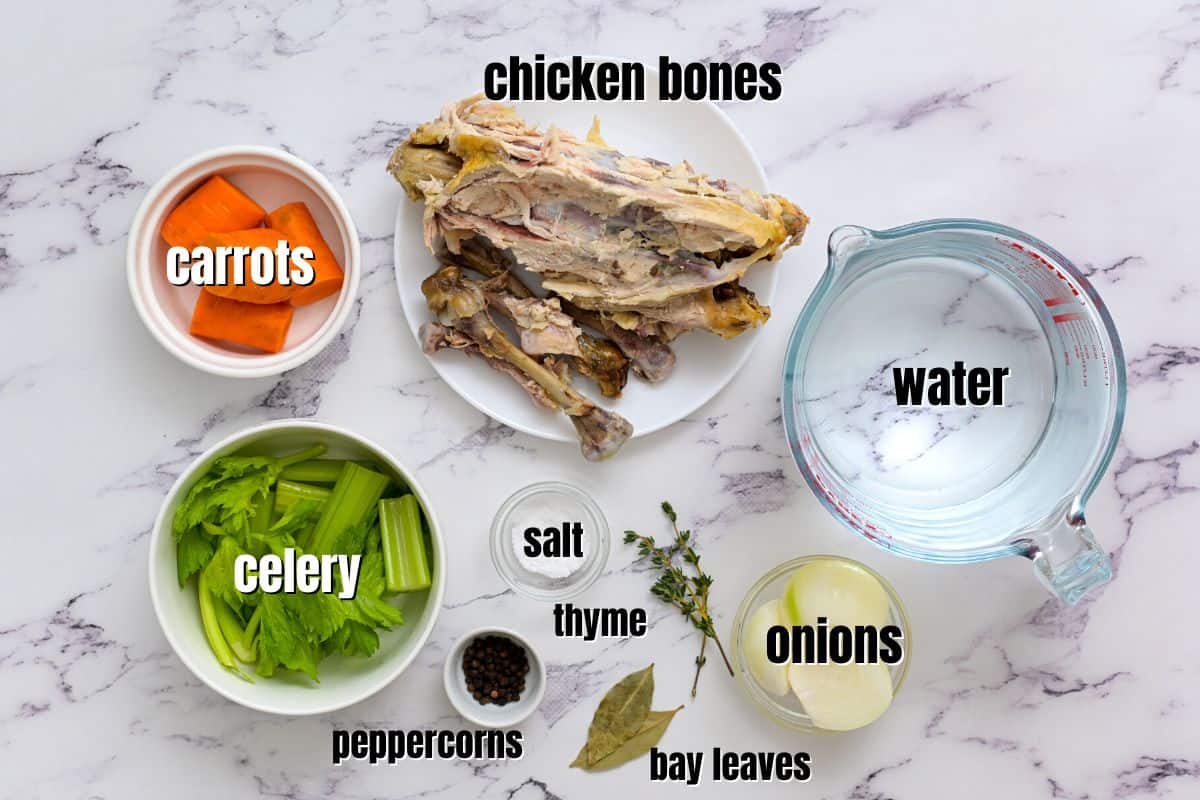
- Chicken Bones: Use bones from cooked chicken, such as the bones leftover from a roasted chicken, homemade rotisserie chicken, bone-in chicken breasts, or bone-in chicken thighs.
- Vegetables: The classic vegetables used to season chicken stock are celery, carrots, and onions. They lend a classic, earthy flavor to the homemade stock that replicates the flavor of a store-bought stock.
- Herbs: I love using fresh thyme, as it pairs beautifully with the flavor of the chicken. Dried bay leaves also help to round out the flavor of the stock. You can also add 1 teaspoon of homemade poultry seasoning for an earthy, warming flavor.
- Salt: I recommend using kosher salt to flavor the chicken stock. You can reduce or omit the salt altogether if needed. This recipe uses a similar amount of salt as a reduced-sodium stock.
- Peppercorns: Give the stock a bold, earthy flavor. Ground black pepper does not dissolve well into the stock, nor does it provide the same robust flavor.
∗ Money Saving Tip ∗
Use your trash! Instead of using whole celery stalks, fresh herbs, and whole carrots, you can use kitchen scraps to make a rich and flavorful chicken stock. Every time you chop an onion, peel a carrot, or chop celery, place the scraps into a freezer-safe gallon-size bag, store them in your freezer for up to 1 month, and add to the bag as you collect more scraps. When you have chicken bones, pull out the scraps to use in place of the fresh vegetables and herbs, and you are well on your way to homemade chicken stock for free!
Tips for Making the Best Chicken Stock
You will find detailed instructions and exact measurements in the recipe card. The following tips will help you to have rich, perfectly seasoned chicken stock.
Simmer over Medium Heat. Don't be tempted to turn the heat to high to speed up the cooking process, as this will cause soluble proteins and rendered fat to emulsify into the cooking liquid. By slowly simmering the liquid, your stock will be clearer and less scum will form.
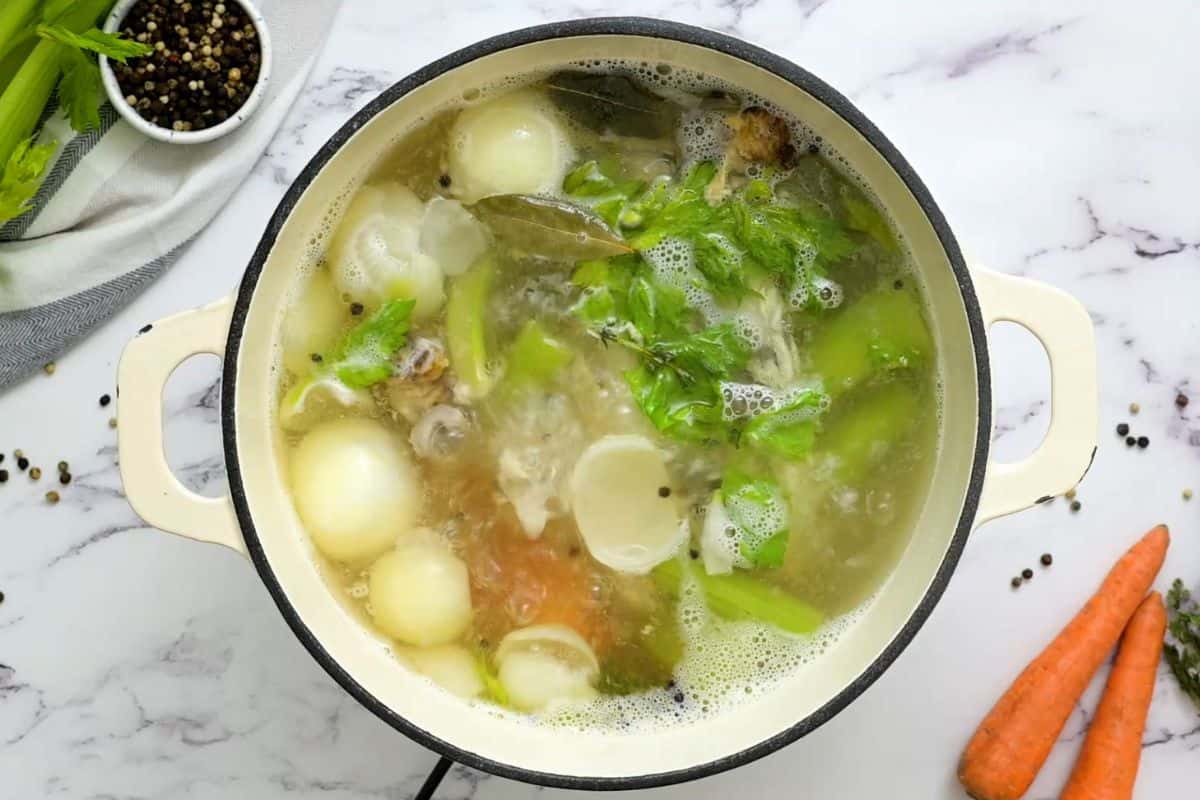
Remove Scum. As the stock simmers, use a slotted spoon to skim off any scum that rises to the surface as the stock cooks.
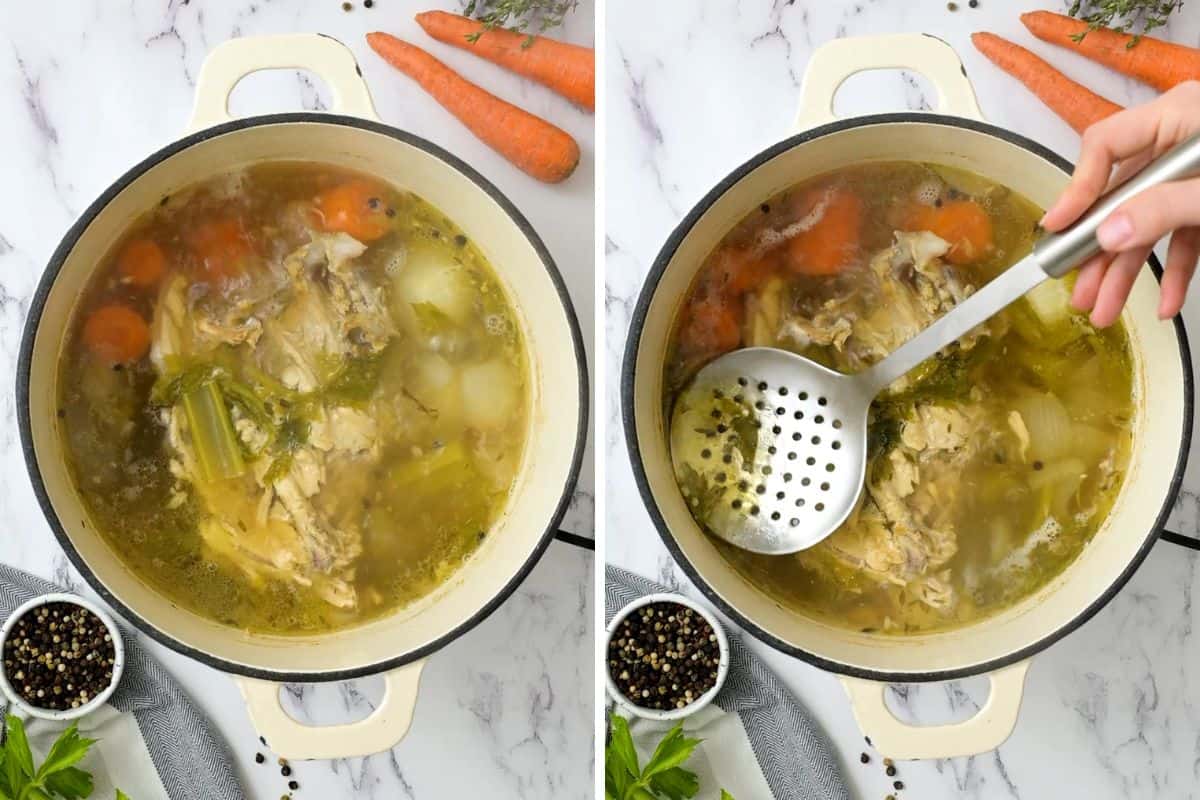
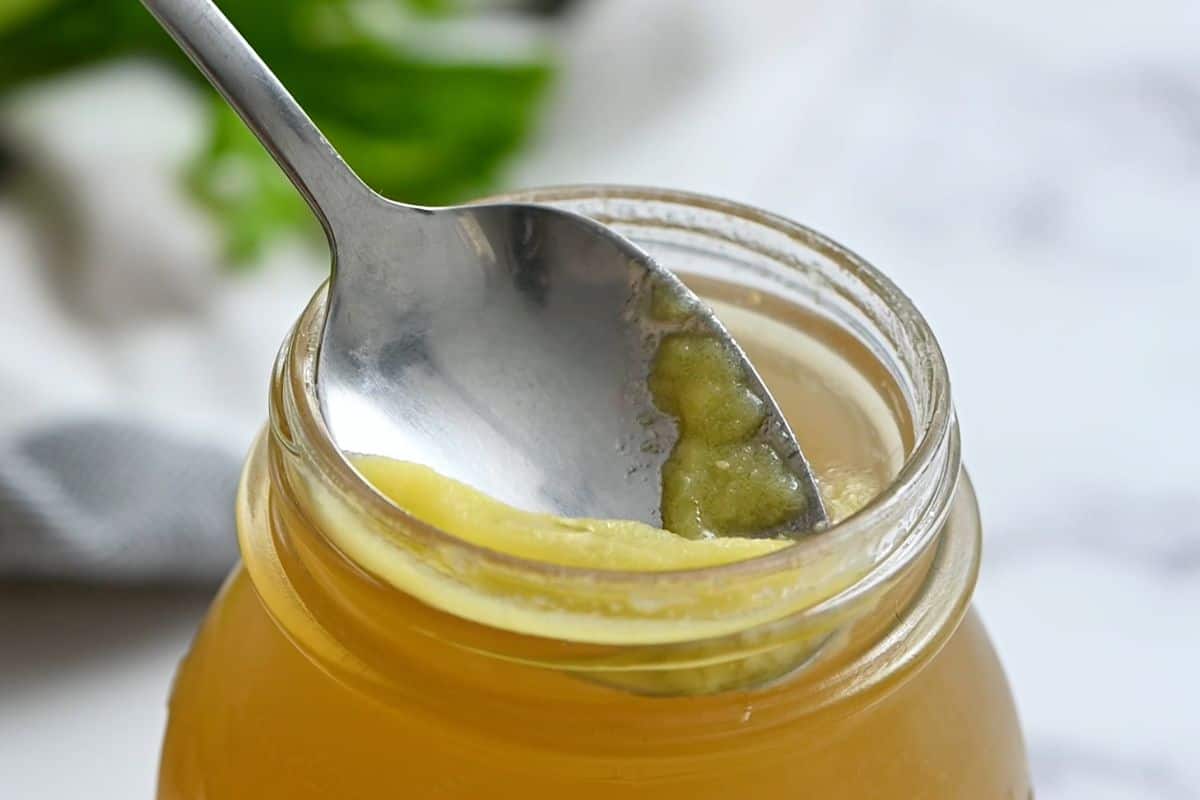
Remove Fat Solids. After cooking, straining, and chilling, it is very natural for a layer of fat to form on top of your homemade chicken stock. Simply use a s spoon to scoop out the any fat solids that may have risen to the top of the broth. You can discard that fat or use it to saute vegetables or soups for added richness.
Slow Cooker Chicken Stock
Instead of simmering your stock on the stove, you can use your slow cooker to make homemade chicken stock. It is the perfect hands-off method to develop a rich stock.
To prepare Crockpot Chicken stock, combine the ingredients in a large crockpot and cook on low for 8-12 hours. Once cooked, strain out the solids using a fine-mesh strainer and allow the stock to cool to room temperature before transferring it to storage containers and refrigerating.
∗ Instant Pot Option ∗
Have an electric pressure cooker? Use it to speed up the process of making chicken stock with my recipe for Instant Pot Chicken Stock.
How to Store Homemade Chicken Stock
Regardless if you plan to refrigerate or freeze your homemade stock, I like to store the chicken stock in two to four-cup increments, as that is what is needed for most recipes.
- Refrigerate: You can store cooled, homemade chicken stock in glass jars or airtight storage containers for up to 5 days in the refrigerator.
- Freeze: Place your cooled chicken stock into freezer-safe containers or bags, being sure to leave 1-2 inches for expansion. Freeze the chicken stock for up to 3 months. When ready to use, defrost the chicken stock overnight in the refrigerator.
FAQs on Homemade Chicken Stock
Chicken broth is made by simmering the meat of a chicken, like chicken breasts, chicken thighs, or a whole chicken, with water and seasonings. Chicken stock is made by simmering chicken bones with water and seasonings. Chicken stock is darker in color and richer in flavor.
You likely cooked the stock over high heat or vigorously boiled it. This can cause soluble proteins and rendered fat to emulsify into the cooking liquid. While still safe to eat, it does look unappetizing. Prevent this by slowly simmering the liquid, so that the stock will be clear and less scum will form.
Recipes using Chicken Stock
Use this chicken stock in any recipe that calls for chicken broth or stock. Below are some of my favorite recipes that feature chicken stock.
- Instant Pot Chicken Noodle Soup
- Slow Cooker White Chicken Chili
- Creamy and Cheesy Chicken and Rice
- Old-Fashioned Chicken Pot Pie
- Baked Potato Soup
- Cream of Chicken Soup
If you enjoyed this recipe for Homemade Chicken Stock, please be sure to leave a comment and review below.
Homemade Chicken Stock

Video
Ingredients
- 1 chicken carcass
- 1 large carrot, washed and cut into quarters
- 2 large onions, peeled, and quartered
- 2 stalks celery, leaves included
- 1-2 sprigs fresh thyme
- 1 tablespoon kosher salt
- 2 dried bay leaves
- 1 tablespoon peppercorns
- 16 cups water
Instructions
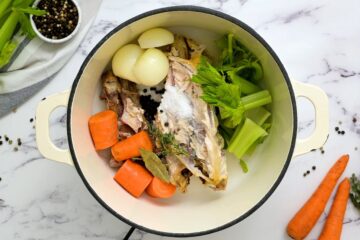
- Place 1 chicken carcass, 1 large carrot (quartered), 2 large onions(quartered), 2 stalks celery(quartered), 1-2 sprigs fresh thyme , 1 tablespoon kosher salt, 2 dried bay leaves, and 1 tablespoon peppercorns into a large stock pan. Cover with 16 cups water.
- Bring chicken stock to a rolling simmer slowly over medium heat. Once lightly boiling, reduce the heat to low and simmer and simmer for 3-4 hours.
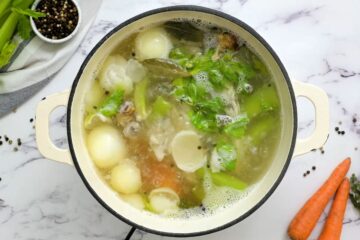
- Check on the broth as it simmers, and skim off any scum that rises to the surface as the stock cooks with a slotted spoon.
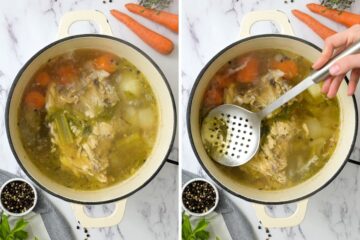
- After simmering for 3-4 hours, remove the chicken stock from the heat and use a fine-mesh strainer to strain off the solids. Discard the solids and allow the strained broth to cool to room temperature.
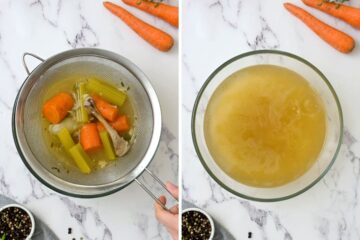
- Transfer the stock to storage containers or jars and refrigerate overnight. After refrigeration, skim off any fat solids that may have risen to the top of the broth with a slotted spoon.

- Store the chicken stock in the refrigerator for 5 days or freeze in freezer-safe containers, leaving 1-inch room for expansion for up to 3 months. Defrost overnight as needed.
Equipment
Notes
Nutrition
Nutrition information is automatically calculated, so should only be used as an approximation.
This post was originally shared in 2017 and then updated in 2022 with new photos and a video.




Hello - can this be made in the Instant Pot?
Hi Addie! Here is my Instant Pot Chicken Stock Recipe.
Thanks so much for that! I'll be making this the next time I cook a whole chicken in the IP, and I'll also start saving my scraps - I never would have thought of that!
I am so glad you enjoyed the tip 🙂
I have been making broths from the leftover vegetables when I buy in bulk and don’t use them all before they start going bad. Does anyone do anything with those solids leftover from the broth process? I realize much of the flavor etc will have leached into the broth but there’s got to be some use for them. A purée for thickening maybe?
I have not tried using the leftover vegetable puree myself, as I mainly use scraps to begin with. But we shall see how others weigh in 🙂
Put in blender then add to pet food, as long as not too many onions.
I make stock and broth often; and while I was aware of the possibility to use my vegetable scraps, I was hesitant. Many volunteer hands at my church and a start up commercial business was where I learned about this method. After seeing your post, I decided to save my scraps and give it a go! My biggest concern was the dirt that's in the crevices of the onion ends, celery ends, etc. But I gave this a try, buying cheese cloth to help with the straining of fine particles at the end of the stock. Now mine tastes as good as the start up chef's, and I am thrilled! Thanks so much for just discussing this. I'm saving, and I'm making.
I am so glad you gave this a try Rosemary and that you were happy with the results. And what a great idea with the cheese cloth--thanks for sharing 🙂
What do you do with the bones and scraps afterward? All my scraps would usually go into the compost, but now they’re contaminated with meat oils. I’d hate to just throw them out!
Hi Kassie, for these vegetable scraps, I would probably throw away--or I do know some people place in bokashi bin that is safe for meat, fish and dairy. It's a closed bin so it doesn't smell and after about 2 weeks the bin contents can be mixed in on your compost heap. But I do not have experience with these.
Put the bones and scraps in a blender and make bone meal for your pets or your plants.
This is perfect for all of my soup making needs! I will be using this a lot this fall and winter!
YAY!!! I always have some on hand and my soups are tastier for it!
Totally life changing!! This needs to be in my fridge at all times- thank you for all the great tips!
Oh you are so welcome Sues! Enjoy!
Kristen,
What is your favorite brand/type of freezer container split or degrade with use?
I love Ziploc freezer containers--they work well and they are inexpensive when they go on sale. I also will use freezer bags (any brand) to save space at time as well.
Does the chicken need to have been cooked or can you start with raw. I have done removed from thighs
Hi Mike, there is no need to first cook the chicken for safety reasons, as you cook the chicken stock for long enough to kill salmonella. I use bones from pre-cooked chicken for convenience (because I am already baking/cooking chicken) and I will say roasted bones do add more flavor to your stock.
Can I use the bones from a Rotisserie Chicken I picked up at Sams?
Hi Mary! You can use any chicken bones you like. The only thing I caution when using a store-bought rotisserie chicken is that if you have a lot of meat left, you may need to decrease the overall salt content, as they tend to be really high in salt. Enjoy!!
The last time I made stock, I actually roasted the bones themselves until well browned, and I liked the results a lot when I added in the scraps and cooked my broth. An even richer taste. So, my process is to cook my chicken, save the bones, roast the bones again, and then make my broth with the browned bones